Friendship in Politics Has an Expiration Date
International politics often creates unusual partnerships. Leaders who appear united on one stage can become fierce critics on another. The recent public disagreement between Italian Prime Minister Giorgia Meloni and U.S. President Donald Trump is a reminder that political alliances are rarely as stable as they seem.
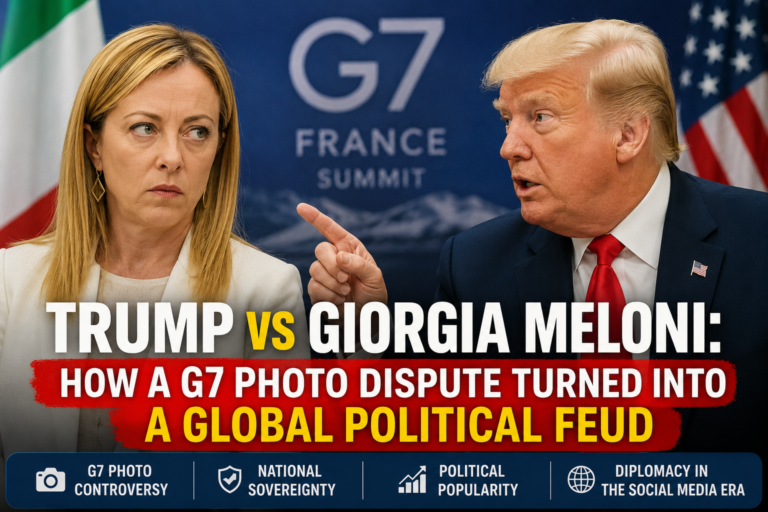
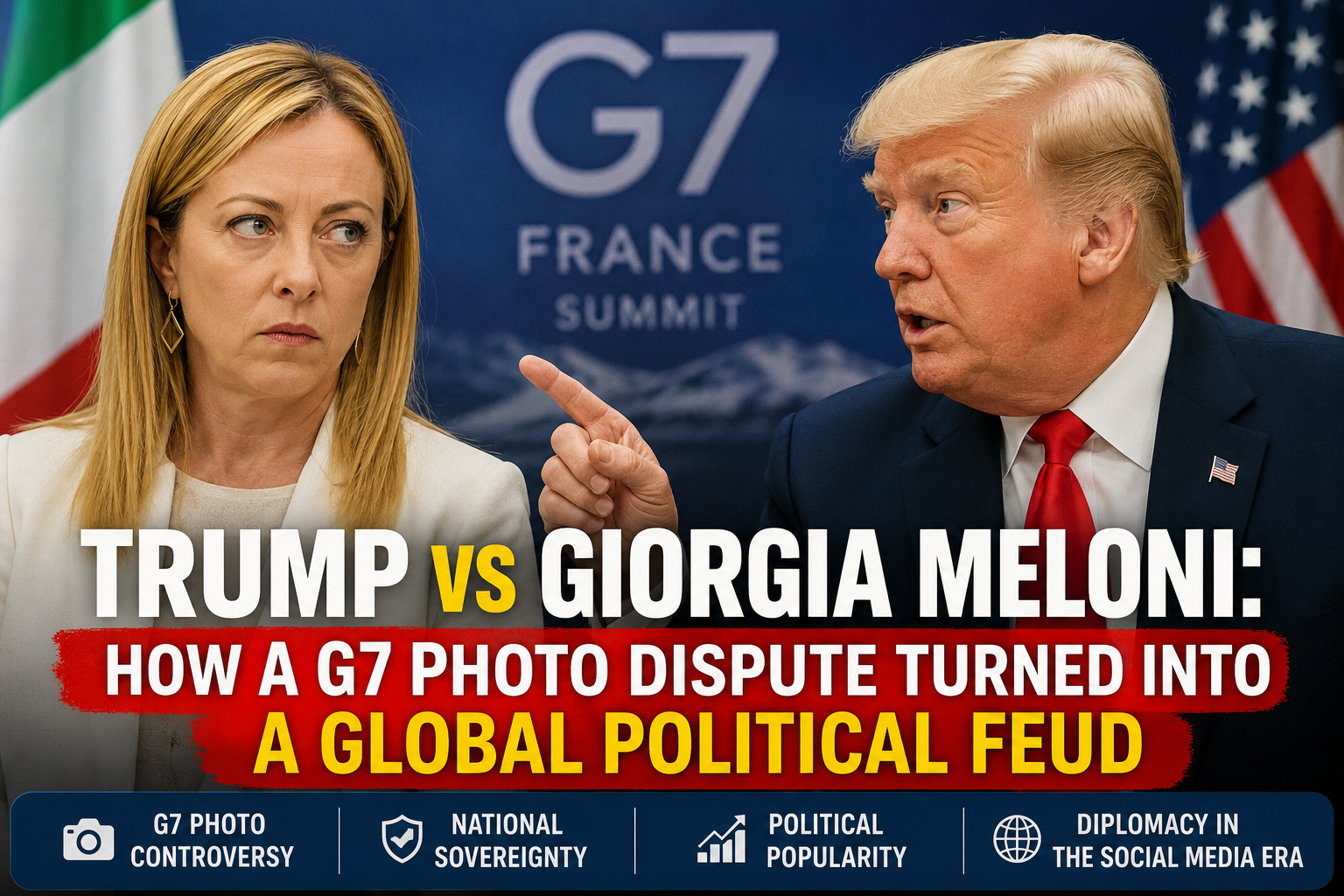
What started as a dispute over a photograph at a global summit has evolved into a broader debate about national sovereignty, political image, and the limits of personal relationships between world leaders.
The episode demonstrates a simple reality: in politics, perception can sometimes matter as much as policy.
A Disagreement That Went Public
The controversy centers around conflicting accounts of interactions between Trump and Meloni during a recent G7 gathering.
Trump publicly suggested that the Italian leader was eager to be photographed with him and implied that she sought to benefit politically from the association. The remarks quickly attracted international attention, not because of the photograph itself, but because they touched on a sensitive issue for any elected leader: political independence.
Meloni responded forcefully, rejecting the characterization and arguing that her political success is rooted in representing Italy’s interests rather than maintaining close personal ties with foreign leaders.
Her response was notable for its directness. Rather than ignoring the comments, she chose to publicly challenge them, emphasizing that Italy’s decisions are made based on national priorities rather than personal relationships.
The Bigger Issue: National Sovereignty
While headlines focused on the photo controversy, a more significant issue emerged beneath the surface.
The dispute expanded into questions surrounding military cooperation and the use of Italian facilities for American operations. These matters touch on a fundamental principle that governments across the world must balance:
How much support should allies provide one another while still preserving their own decision-making authority?
For countries that maintain strategic partnerships with larger powers, this balance is often delicate. Leaders must cooperate internationally while also demonstrating to domestic audiences that they are not simply following another nation’s agenda.
Meloni’s comments reflected this challenge. By emphasizing Italy’s sovereignty, she positioned herself as a leader willing to cooperate with allies while defending national autonomy.
Why Political Leaders Care About Popularity
One of the most striking aspects of the exchange was the discussion of public approval.
Modern politics operates in a world where popularity is constantly measured through polls, social media engagement, and public sentiment. Leaders know that every international appearance can influence how they are viewed at home.
Trump’s criticism suggested that Meloni’s relationship with him could affect her standing among Italian voters. Meloni responded by arguing that popularity should be earned through effective governance rather than personal connections.
This disagreement highlights a larger trend in global politics.
Citizens increasingly judge leaders based on domestic outcomes such as economic performance, security, and public services rather than diplomatic friendships alone. While international relationships remain important, voters often care more about what those relationships actually deliver.
The Social Media Era of Diplomacy
A generation ago, disagreements between world leaders were often handled behind closed doors through diplomats and official channels.
Today, those conflicts frequently unfold in public.
Social media platforms have transformed diplomacy into a real-time spectacle where statements can reach millions of people within minutes. Political disputes that once remained private can now become global headlines almost instantly.
This shift creates both opportunities and risks.
Leaders can communicate directly with citizens without relying on traditional media. At the same time, public disagreements can escalate faster and become harder to resolve.
The Trump-Meloni exchange is a textbook example of this new reality. A disagreement that might once have been discussed privately instead became part of a worldwide political conversation.
Why This Matters Beyond Italy and the United States
It would be easy to dismiss this feud as a clash of personalities. However, the underlying themes are relevant far beyond the two leaders involved.
The dispute raises questions about:
- The role of personal relationships in international politics.
- How leaders balance alliances with national interests.
- Whether public popularity should influence foreign policy decisions.
- The growing impact of social media on diplomatic relations.
- The challenge of maintaining sovereignty in an interconnected world.
These issues affect governments across Europe, Asia, and beyond.
As global politics becomes increasingly personalized, the line between personal disagreements and national policy continues to blur.
The Reality of Modern Alliances
History shows that alliances survive disagreements when they are built on shared interests rather than personal chemistry.
Countries cooperate because it serves strategic, economic, or security objectives. Leaders come and go, but national interests tend to remain.
The recent exchange between Trump and Meloni may generate headlines, but the broader relationship between the United States and Italy is far larger than any single dispute.
Political friendships can be useful. They can create trust, improve communication, and accelerate cooperation.
But when national priorities collide, even friendly relationships face limits.
That is perhaps the most important lesson from this episode.
In international politics, friendship may help open doors, but national interest ultimately decides which doors remain open.
Final Thoughts
The Trump-Meloni disagreement is about far more than a photograph or a public insult. It reflects the changing nature of diplomacy in an era where every statement becomes a headline and every interaction is scrutinized by millions.
For leaders navigating today’s political landscape, maintaining strong alliances while protecting national independence has become one of the defining challenges of governance.
And as this latest feud demonstrates, even the closest political relationships can become complicated when public image, domestic politics, and national interests collide.
About the Author