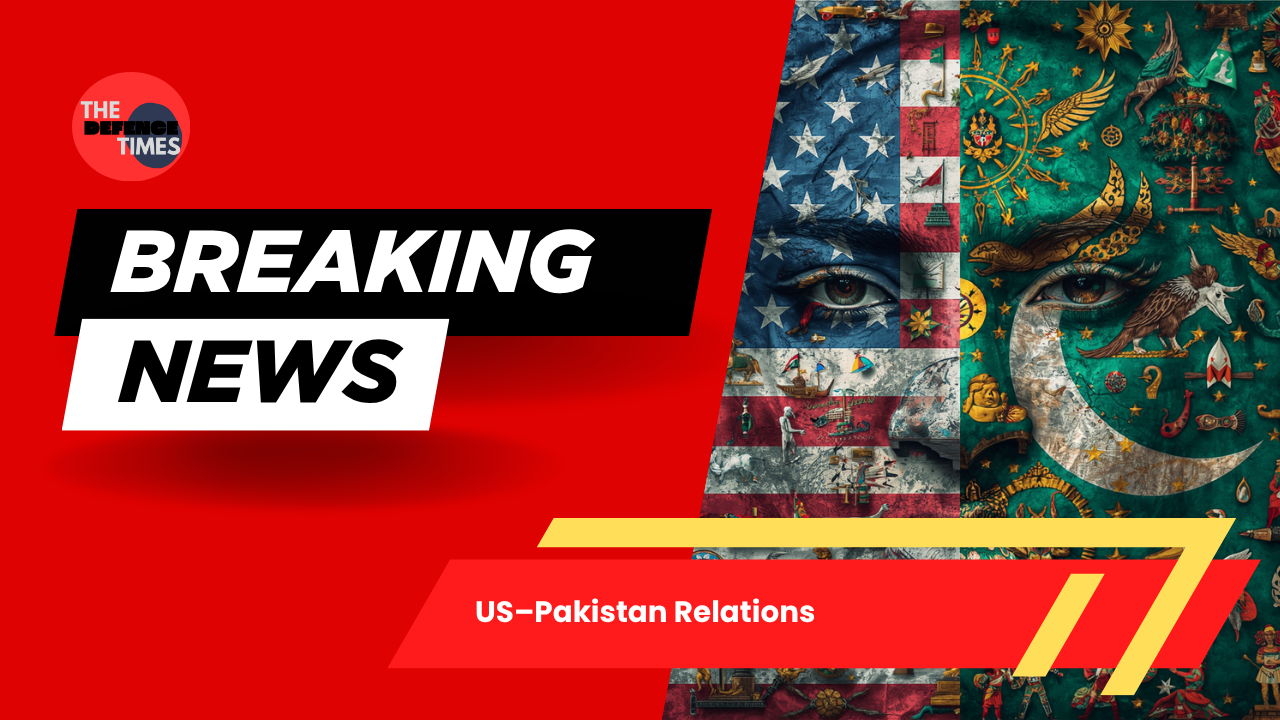
If international relationships had relationship status updates like Facebook, the one between the United States and Pakistan would permanently say: “It’s complicated.”
For decades, this partnership has swung between cooperation and conflict, trust and suspicion, strategic alignment and emotional distance. It’s not a simple story of friendship or rivalry. It’s more like two countries needing each other… while quietly doubting each other’s intentions.
Let’s break it down properly, from history to the present and what might come next.
🌍 Before Pakistan Even Existed (Pre-1947)
Before Pakistan came into existence in 1947, the idea of a US–Pakistan relationship didn’t technically exist. But global politics was already shaping the future.
Events like World War II and agreements such as the Atlantic Charter (1941) played a role in redefining global power structures. The United States emerged as a major global leader, while South Asia was still under British rule.
This period laid the foundation for what would later become strategic alignments based on power, geography, and influence.
🤝 Early Friendship and Alliances (1947–1960s)
After gaining independence in 1947, Pakistan quickly moved toward building strong ties with the United States.
Why? Simple.
Pakistan needed economic support, military backing, and international recognition, while the US wanted allies to counter the spread of communism during the Cold War.
This led to Pakistan joining major alliances like:
- SEATO (1954)
- CENTO (1955)
These weren’t just symbolic memberships. They came with military aid, economic support, and strategic cooperation.
But even in this early phase, cracks were visible. Pakistan wanted partnership, not subordination. As Ayub Khan famously said:
“We are willing to be friends, but not satellites.”
That line pretty much sums up the entire relationship going forward.
⚠️ The 1970s: Distance, Disappointment, and Distrust
The 1970s were… messy.
Events like:
- The 1971 Indo-Pak war
- Pakistan’s internal political shifts
- Changing US priorities
created distance between the two nations.
Then came 1979, a turning point year. The Soviet invasion of Afghanistan suddenly made Pakistan strategically important again.
Funny how geopolitics works. Ignore someone… until you need them.
🔥 The 1980s: Strategic Partnership (Afghan War Era)
This decade saw one of the strongest phases of cooperation.
The United States and Pakistan worked closely to support Afghan resistance against Soviet forces. Pakistan became a frontline state in the Cold War.
What did this bring?
- Massive US funding
- Military cooperation
- Intelligence collaboration
But here’s the catch: this partnership was transactional.
Both countries had goals, but they weren’t exactly the same.
Once the Soviet Union withdrew, the intensity of the relationship started fading again.
💣 The 1990s: Sanctions and Nuclear Tensions
After the Cold War ended, the US lost some interest in Pakistan. And then came the nuclear issue.
Key events:
- 1990: Pressler Amendment sanctions
- 1998: Pakistan’s nuclear tests
The US imposed sanctions, citing concerns over nuclear weapons development.
From Pakistan’s perspective, this felt like betrayal.
From the US perspective, it was about global security.
From a neutral perspective? Classic case of “we were useful until we weren’t.”
🌐 Post-9/11 Era: Alliance Against Terrorism (2001–2010s)
Then came September 11, 2001. Everything changed overnight.
Pakistan became a key ally in the US-led War on Terror.
This phase included:
- Intelligence sharing
- Military operations
- Financial aid
- Counter-terrorism cooperation
But it wasn’t smooth.
Major issues included:
- Mistrust over militant groups
- US drone strikes in Pakistan
- Osama bin Laden being found in Abbottabad (2011)
That last one? Yeah, that didn’t exactly help trust levels.
By the late 2010s, tensions started rising again, with the US reducing military aid and questioning Pakistan’s role.
🧭 2021–Present: A Relationship in Transition
The modern phase of US–Pakistan relations is… awkward.
Key developments include:
1. US Withdrawal from Afghanistan (2021)
The chaotic exit from Afghanistan changed regional dynamics completely. Pakistan’s role became controversial again.
2. Growing US–India Partnership
The US is strengthening ties with India, which naturally makes Pakistan uneasy.
3. Pakistan–China Relations
Pakistan’s close relationship with China, especially through projects like CPEC, adds another layer of complexity.
4. Decline in Military Aid
The US has reduced military support, signaling a shift in priorities.
5. Political Tensions
There are ongoing accusations of interference in internal matters, along with what many describe as a “cold shoulder” approach from US leadership.
6. Nuclear Concerns
The US continues to monitor Pakistan’s nuclear capabilities closely.
Basically, both countries are still talking… but not exactly smiling.
🧠 The Core Problem: Trust Issues
Let’s not pretend this is just about strategy.
At its core, the relationship suffers from deep mistrust.
As Bruce Riedel described it:
The relationship is driven by strategic interests but clouded by mutual distrust.
And honestly, that line still holds true today.
🚀 Way Forward: Can This Relationship Be Fixed?
Surprisingly… yes. But only if both sides evolve.
Here’s what could actually improve things:
💰 1. Economic Cooperation
Moving beyond military aid into trade, investment, and business partnerships.
🌏 2. Regional Stability
Working together for peace in South Asia and the Middle East.
🎓 3. Education and Human Development
Student exchanges, research collaboration, and skill development.
🌱 4. Climate Cooperation
Both countries face climate challenges. Cooperation here could be a win-win.
🤝 5. Cultural Exchange
Because sometimes politics ruins things that people could fix.
⚖️ 6. Balance in South Asia
Maintaining stability between India and Pakistan is crucial for regional peace.
🔮 7. Strategic Neutrality
Pakistan balancing between the US and China without becoming overly dependent on either.
🎯 Final Thoughts
The US–Pakistan relationship is not a fairy tale. It’s not even a stable partnership.
It’s a strategic dance, where both sides step forward when needed and step back when convenient.
There’s history, there’s tension, there’s cooperation… and there’s always uncertainty.
But here’s the thing:
Despite everything, neither country can completely ignore the other.
And maybe, just maybe, that’s what keeps this complicated relationship alive.
About the Author