Mecca, Saudi Arabia | September 2026
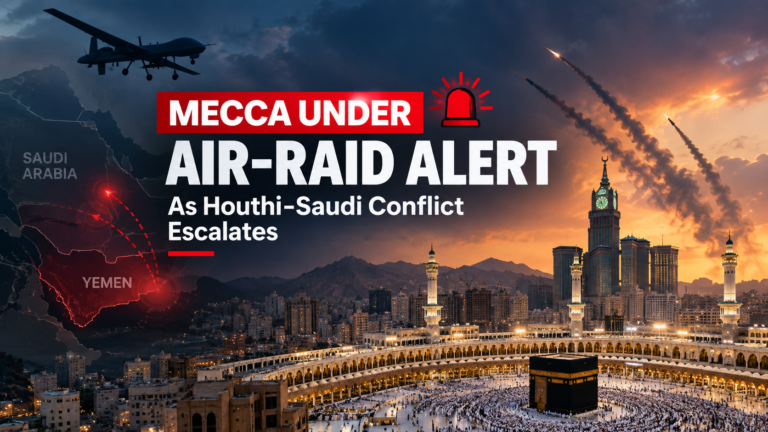
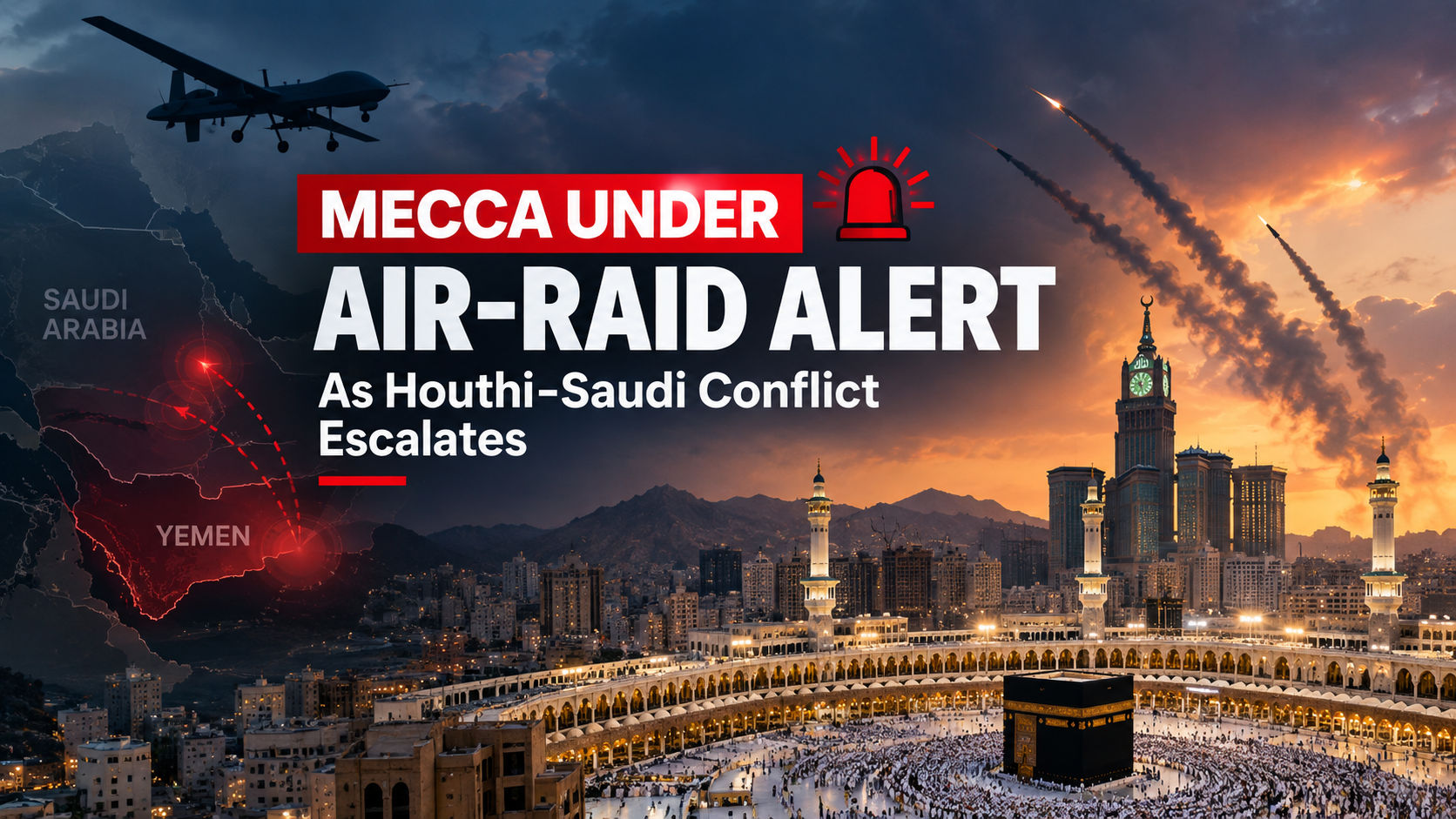
Mecca, the holiest city in Islam, was placed under a brief emergency alert on September 15 as tensions between Saudi Arabia and Yemen’s Houthi movement intensified.
The warning was issued through Saudi Arabia’s emergency warning system and covered Mecca along with Jeddah and Taif. Saudi authorities later announced that the immediate danger had passed. The alert marked an extraordinary moment because Mecca had not previously received this type of aerial-threat warning during the current escalation.
The development has drawn international attention because of Mecca’s religious importance and because the latest escalation comes amid renewed fighting involving the Houthis, Saudi Arabia and forces operating in Yemen.
What Happened in Mecca?
On Tuesday, September 15, Saudi Civil Defence issued a warning to people in several western parts of the country.
Residents were advised to move indoors, stay away from windows and open areas, and follow instructions issued through official channels. The warnings were subsequently cancelled after authorities determined that the immediate danger had passed.
Saudi Civil Defence also advised people not to gather in affected areas or attempt to film the incident while emergency measures were active.
The alert itself did not initially identify the exact nature of the threat. Later, Saudi military officials said that a drone launched from Yemen had been intercepted south of Mecca before entering the city’s restricted airspace.
Saudi Arabia Says Drone Was Intercepted
According to Saudi military officials, the Royal Saudi Air Defense Forces intercepted and destroyed a Houthi drone south of Mecca on September 15.
Coalition spokesperson Major General Turki al-Maliki said the drone was intercepted before it entered the prohibited airspace surrounding the holy city. Saudi officials described the protection of the holy sites and pilgrims as a major security priority.
The Saudi account has not gone undisputed.
A Houthi political official rejected the allegation that the group had deliberately targeted Mecca, illustrating the competing narratives surrounding the incident.
That distinction matters. During an active conflict, claims about who launched a particular weapon, what its intended target was and what happened to it can be disputed by the parties involved.
Why the Mecca Alert Matters
The significance of the warning goes beyond the military incident itself.
Mecca is home to the Masjid al-Haram and the Kaaba, the central sanctuary of Islam. Millions of Muslims around the world consider the city sacred, and the area receives large numbers of pilgrims during Islamic religious seasons.
Any security warning involving Mecca therefore carries an importance that extends well beyond ordinary military operations.
The September 15 alert was also part of a broader series of warnings across Saudi Arabia. Civil Defence issued alerts affecting several locations, including Jeddah, Taif, Abha, Jazan, Yanbu and AlUla, before subsequently announcing that the immediate danger had passed in several areas.
Houthi Attacks on Saudi Arabia
The Mecca incident came after a series of missile and drone attacks launched from Yemen.
Saudi officials said attacks on September 14 injured 13 people in the kingdom’s south. The reported attacks affected locations including Khamis Mushait, Abha and Taif, with Saudi authorities also reporting damage to homes and vehicles.
The Houthis, meanwhile, have claimed responsibility for attacks against Saudi military and strategic targets.
The group said one large operation involved ballistic missiles and drones directed toward King Khalid Air Base. As is common in an active conflict, statements from opposing sides about targets, damage and military results do not always match.
The Conflict Has Expanded Beyond Individual Attacks
The current escalation is not limited to isolated missile or drone launches.
The wider conflict has also affected the Red Sea and the Bab el-Mandeb Strait, one of the world’s important maritime chokepoints.
The Houthis have increased their military activity along Yemen’s Red Sea coast, while fighting with Saudi-backed forces has intensified. The renewed violence has also created new concerns for international shipping and regional energy infrastructure.
This is where a regional conflict becomes an international economic problem. Oil, shipping, insurance and supply chains have an irritating habit of refusing to remain politely inside national borders.
What Happens Next?
The immediate alert in Mecca was lifted, but the broader security situation remains tense.
Saudi Arabia has indicated that it intends to respond to attacks against its territory, while Houthi officials have continued to threaten further military action.
The situation could therefore develop along several different paths:
- Additional missile and drone attacks against Saudi territory
- Further Saudi military operations in Yemen
- Increased pressure on Red Sea shipping routes
- Greater involvement by regional powers
- New diplomatic efforts aimed at containing the conflict
For civilians, however, the most important issue remains straightforward: safety.
Saudi authorities have repeatedly urged residents to follow official emergency instructions rather than relying on social-media reports during attacks or warnings.
A Significant Moment for Mecca
The September 15 warning was unusual because it brought the threat of the expanding regional conflict closer to one of Islam’s most important religious centers.
Although the alert was lifted quickly, the incident demonstrates how rapidly the geographical boundaries of a conflict can change.
Saudi Arabia says its air defenses prevented a drone from entering Mecca’s restricted airspace. Houthi officials have rejected the allegation that the group deliberately targeted the holy city. What remains clear is that the security situation across western Saudi Arabia has become more serious, with authorities preparing for possible further attacks.
For now, the immediate danger reported by Saudi authorities has passed. The larger conflict, unfortunately, has not.
About the Author